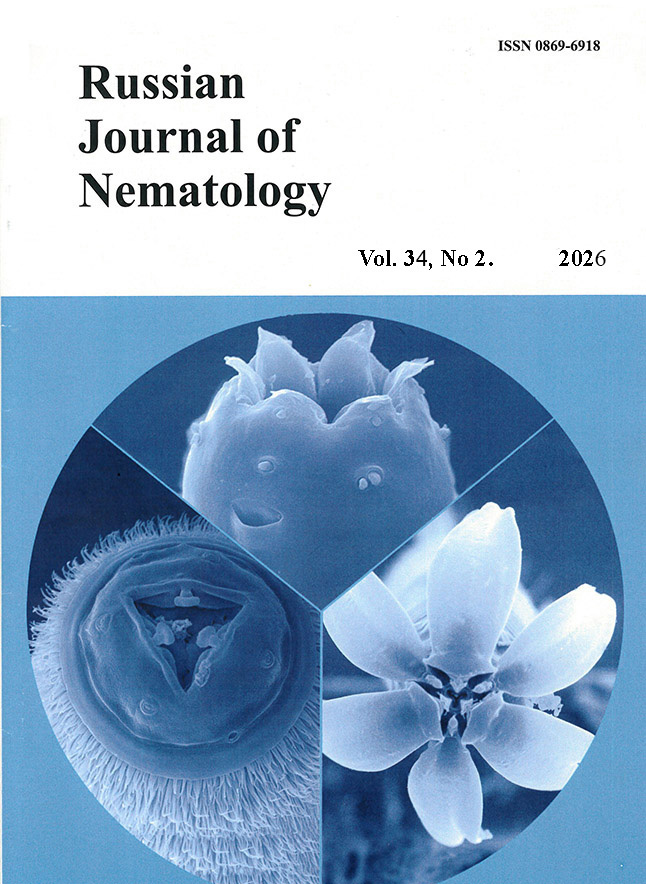
Haemonchus contortus (Rudolphi, 1803) Cobb, 1898 (Nematoda: Trichostrongylidae) from a goat on Mindanao, Philippines: genetic diversity of the widespread species
📄 Download Full PDFLoginova, O.A., Luneva, A.V., Sumaya, N.H.N. & Spiridonov, S.E. (2026). Haemonchus contortus (Rudolphi, 1803) Cobb, 1898 (Nematoda: Trichostrongylidae) from a goat on Mindanao, Philippines: genetic diversity of the widespread species. Russian Journal of Nematology, 34(2), 167–176. https://doi.org/10.65395/262.973715
Summary
Haemonchus contortus is one of the most pathogenic and economically important gastrointestinal nematodes of small ruminants worldwide, causing anemia, reduced productivity and substantial losses in goat and sheep production systems. During the slaughter of three goats for meat in Iligan City, Mindanao, Philippines, trichostrongylid nematodes were detected in the abomasum of one animal. Using an integrative approach that combined light microscopy, scanning electron microscopy, morphometric analysis, and DNA-based characterisation, a subset of these specimens was identified as H. contortus. In one specimen, direct sequencing of the ITS rDNA amplicon produced overlapping peaks in the ITS1 region, so the product was cloned for further analysis. Phylogenetic analyses based on ITS rDNA and CoxI mtDNA, together with a CoxI haplotype network and pairwise distance estimates, were used to assess the genetic diversity and taxonomic affinities of the Haemonchus specimens. The ITS data revealed three closely related sequence variants with low divergence, supporting their interpretation as intraspecific variation rather than taxonomic heterogeneity. In turn, analysis of the CoxI sequence showed that the Philippine specimens belonged to a widespread H. contortus assemblage while representing a unique haplotype. This pattern suggests local genetic differentiation within a broadly distributed and genetically heterogeneous species. Minor incongruence between ITS- and CoxI-based relationships should be interpreted cautiously, given marker-specific evolutionary histories and the still limited regional sampling in public databases.