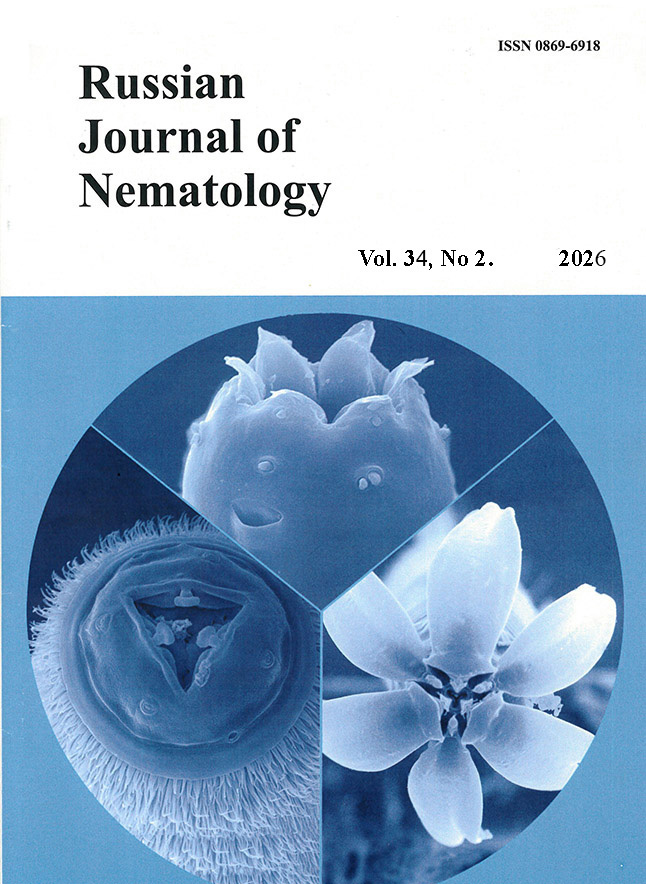
Quinisulcius salviae sp. n. (Tylenchida: Telotylenchidae) from Mexico, with molecular characterisation of some stunt nematodes
📄 Download Full PDFCid del Prado Vera, I., Sosa Pérez, E., Ruiz Ibarra, J.H., Ferris, H., Álvarez-Ortega, S., Michaud, A. & Subbotin, S.A. (2026). Quinisulcius salviae sp. n. (Tylenchida: Telotylenchidae) from Mexico, with molecular characterisation of some stunt nematodes. Russian Journal of Nematology, 34(2), 131–149. https://doi.org/10.65395/262.753371
Summary
Several stunt nematode species, including Bitylenchus hispaniensis, B. maximus, B. ventrosignatus, Bitylenchus sp. 1, Paratrophurus striatus, Quinisulcius capitatus, Q. salviae sp. n., Tylenchorhynchus annulatus, T. claytoni, T. clarus, T. thermophilus, Tylenchorhynchus spp. 1–3, T. zeae, and Paramerlinius sp., were recovered from soil samples collected in Mexico, the USA (California, Florida, Minnesota, and North Dakota), India, Spain and South Korea and were characterized using morphological and molecular approaches. A new species, Quinisulcius salviae sp. n., isolated from the rhizosphere of Salvia polystachia in Mexico, is described herein. The new species is most similar to Q. capitatus but can be distinguished from it by a combination of morphological, morphometric and molecular characters. Phylogenetic relationships among the examined taxa and other representatives of the family were reconstructed using sequences of the D2-D3 expansion segments of the 28S rRNA gene, the ITS of rRNA gene, and the mitochondrial cytochrome c oxidase subunit I (COI) gene. In total, 43 new D2-D3 28S rRNA, thirteen new ITS rRNA, and nine new COI gene sequences were generated. The resulting phylogenetic analyses provided new insights into evolutionary relationships within the Telotylenchinae, revealed the non-monophyly of several currently recognised genera, and underscored the need for a comprehensive taxonomic reassessment of the group based on integrative analyses incorporating morphology and multilocus molecular data.